

The number $3 million carries a certain weight no matter where you are. It sounds like
enough—enough to be done deliberating, enough to choose the home you want and call it
finished. What surprises most buyers is how differently that number translates depending on
which city they’re standing in. In some places, $3 million buys you a mansion with room to
spare. In others, it buys you a carefully curated compromise. Understanding that difference is the
whole conversation.
In Houston, $3 million buys you a house—not a condo, not a townhome, not a studio with
“charming exposed brick” and 800 square feet—a house, with bedrooms, bathrooms, a yard, and
room to actually live your life.
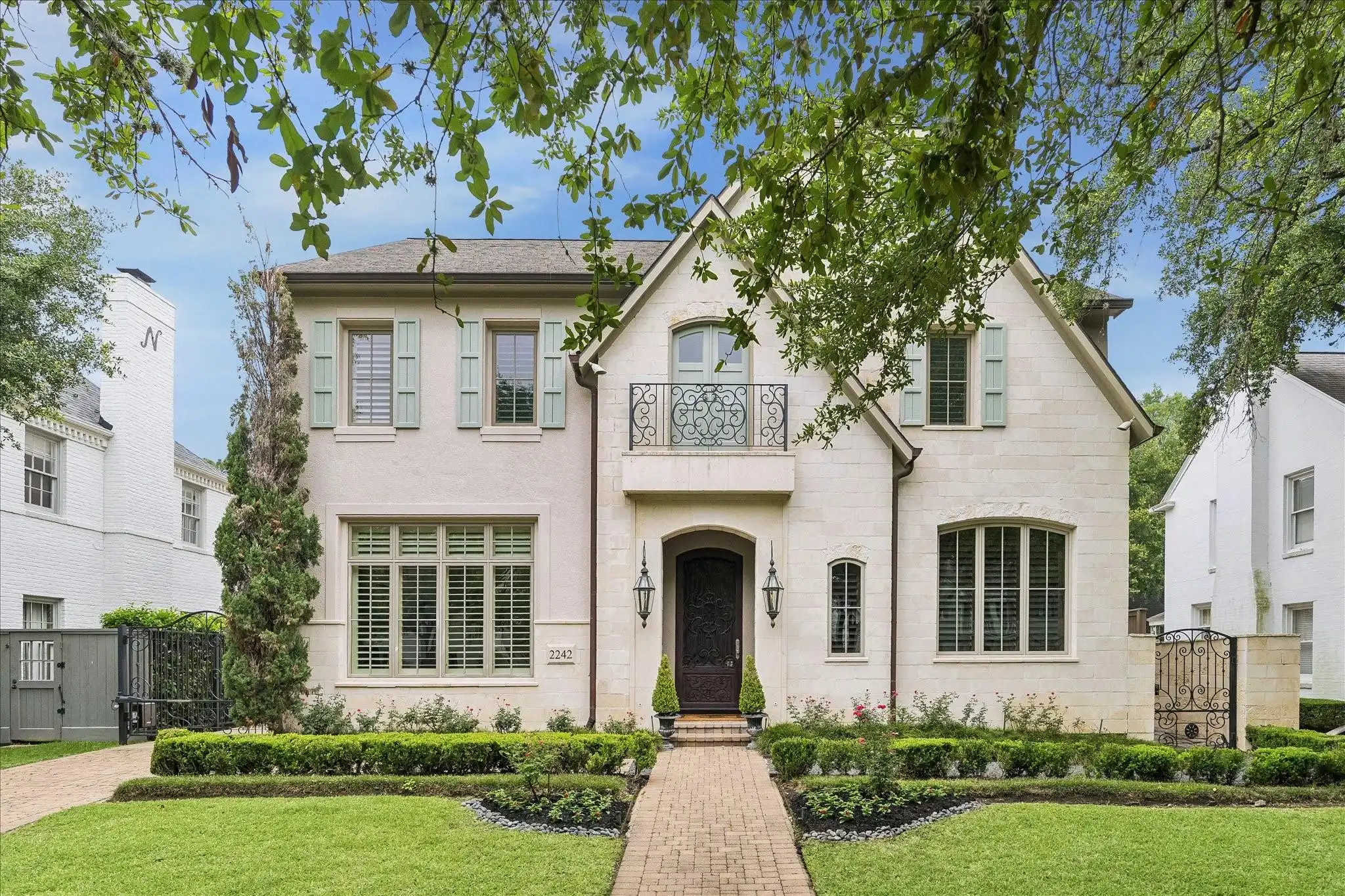
One of my current listings, 2242 Pelham Dr. in the River Oaks area sits on the market right now at $3,250,000, offering five bedrooms, six bathrooms, and nearly 5,000 square feet in one of the most
storied neighborhoods in the South.
3807 Westerman Street in West University Place recently sold with a last list price for $3,195,000—a zip code known for top-rated schools, walkability to Rice Village, and the rare quality of feeling like a small town folded neatly into a major city.
5565 Tilbury Drive in Tanglewood was recently sold with a last list price of $2,750,000. Tanglewood is
an established neighborhood that trades the buzz of the Galleria for a calm, family-friendly
neighborhood.
Three neighborhoods, three entirely different personalities, all houses, all right around $3
million.
Leaving Texas for a moment reveals just how remarkable that reality is. In Manhattan’s $2–$3
million range, the market offers luxury condos with floor-to-ceiling windows, marble
countertops, and doormen who know your name. At The Sutton in Sutton Place, two-bedroom
apartments start around $2.3 million. At the Georgica on the Upper East Side, three-bedroom
condos open at $2.675 million. These buildings deliver impressive amenities designed to
compensate for the fact that “outdoor space” generally means a shared rooftop terrace or a Juliet
balcony, and square footage in this range typically lands between 1,000 and 1,800 square feet
with shared walls. The same $3 million that delivers nearly 5,000 square feet in River Oaks
delivers perhaps 1,500 square feet in Midtown East, on a good day.
Chicago presents a more flattering comparison, which somehow makes Houston’s position even
more striking. At the $3 million mark, Chicago buyers enter what the local market calls its iconic
tier. Buyers can find a historic Gold Coast brownstone on a tree-lined street or new construction
in Lincoln Park with custom finishes and design details that signal real investment. Houses in
that category tend to range from 2,500 to 3,500 square feet, with premium pricing attached to properties within walking distance of Lake Michigan, and many of those properties move
off-market through private networks before they ever reach a listing site. Chicago at $3 million
gives buyers something worth having. The challenge is that the best ones rarely make it to a
listing site.
Boston is where $3 million starts to shift the conversation from square footage to something
harder to quantify. Buyers at this level in Greater Boston tend to prioritize longevity over
size—they’re looking for a place in Wellesley, Weston, or Concord that grows with them rather
than one they’ll outgrow. Homes at this price point typically run 2,500 to 3,500 square feet on a
modest lot, and the property taxes reflect everything the address includes. The prestige is genuine
and well-earned—it’s just that in Houston, you don’t have to trade space to get it.
Now, let’s turn our attention towards Los Angeles. Here, $3 million can typically purchase a
home under 2,000 square feet. Oftentimes, these homes include updated bungalows with modern
interiors, contemporary townhomes with rooftop decks, or condos that treat design as a substitute
for scale. The disadvantage is the lack of space and privacy that owners receive. Though buyers
commonly value Los Angeles more than these aspects. West Hollywood, specifically, is a
walkable, culturally relevant area that is a genuine value proposition for the right buyer. The
telling detail, though, is that the market’s own advocates spend considerable effort managing
expectations about the lack of outdoor space, revealing the trade-off at the center of that
purchase.
Houston’s position in this conversation is not that other cities fall short; it is that Houston does
not ask buyers to accept the premise that $3 million requires negotiation. At this price point, you
can get the best of both worlds in neighborhoods that have commanded prestige and allowed for
space for generations. However, each city holds something valuable and worth considering.
When you are ready to find your place in this city, I’m here, and I’m your best choice for
Houston Real Estate.
Until next time,
Dee Dee Guggenheim Howes