

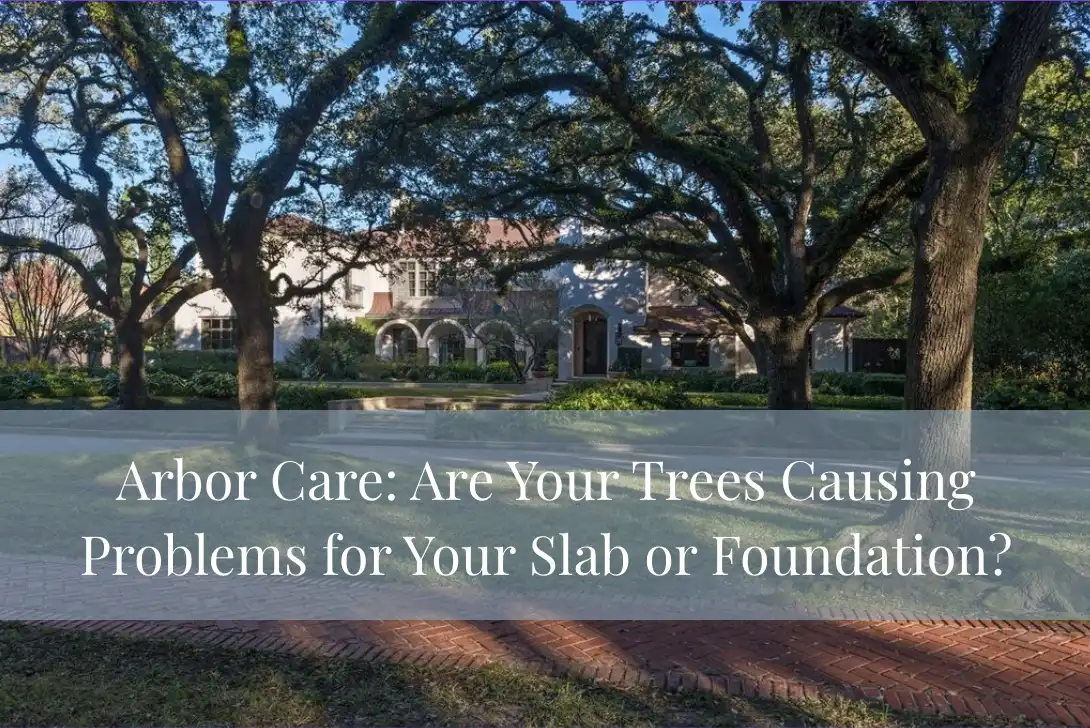
Trees are one of my favorite parts of a beautiful Houston property. They provide shade, character, privacy, and that established feeling you simply can’t recreate overnight. But as much as we love our trees, they are living things that require care, especially when they are growing close to our homes. And sometimes, what looks like a landscaping issue can actually become a foundation concern.
We tend to think of tree roots as something that grows underground and stays out of sight. In reality, roots are constantly searching for water, oxygen, and nutrients. While they generally aren’t strong enough to break through a solid concrete foundation, they can grow around foundations, beneath slabs, or into cracks that already exist. The bigger concern is often what happens to the soil surrounding your home.
Houston homeowners know how unpredictable our weather can be. We can go from weeks of heat and dry weather to heavy rain in a matter of days. Trees absorb significant amounts of water from the surrounding soil, and during dry periods, large trees can contribute to moisture loss. Certain soils, particularly expansive clay, can shrink as they dry and expand again when they become wet. When that soil movement happens beneath a home, it can contribute to uneven settling and movement in a slab or foundation. So, how do you know if your trees could be contributing to a problem?
Start by paying attention to changes around your home. Cracks in your foundation or exterior walls, doors and windows that suddenly become difficult to open, uneven floors, or gaps around door and window frames can all be signs that something is shifting. You may also notice sidewalks or driveways lifting near large trees. Of course, none of these signs automatically mean that tree roots are the culprit. Drainage problems, plumbing leaks, soil erosion, natural settling, and other factors can also cause similar issues.
This is why annual tree care is so important. Arbor care isn’t just about keeping your yard looking beautiful. Regular inspections can help identify trees with extensive root systems, unhealthy growth, structural concerns, or placement issues before they become bigger problems. If you have large, mature trees growing particularly close to your home, it’s worth having a professional take a look at both the trees and the surrounding conditions.
And if you’re planting new trees, think about the future—not just how the landscaping looks today. A small tree at the nursery can eventually develop a large canopy and an extensive root system. The appropriate planting distance depends on the species, soil, and conditions, but large mature trees are generally recommended to have considerably more clearance from a home than smaller ornamental varieties.
One important reminder: don’t immediately assume that a tree needs to be removed. Mature trees add tremendous beauty and value to a property, and removing one can sometimes create additional soil movement, particularly in expansive clay soils. Depending on the situation, solutions such as improved drainage, root barriers, or selective root pruning may be worth considering. Before removing a mature tree, consult an arborist and, if foundation movement is suspected, a qualified foundation professional.
Your home and your trees can absolutely coexist beautifully. The key is being proactive. Annual arbor care, consistent attention to drainage and soil moisture, and keeping an eye out for changes around your home can help you catch small concerns before they become expensive ones.
After all, maintaining a home is about more than what you see inside the front door. The landscaping, trees, soil, slab, and foundation all work together to protect the place you call home. A little attention each year can go a long way toward preserving both the beauty of your property and the investment you’ve made in it.
Until next time,
Dee Dee Guggenheim Howes
Source: https://completefoundationrepair.com/can-tree-roots-really-damage-your-homes-foundation-what-every-homeowner-should-know/