

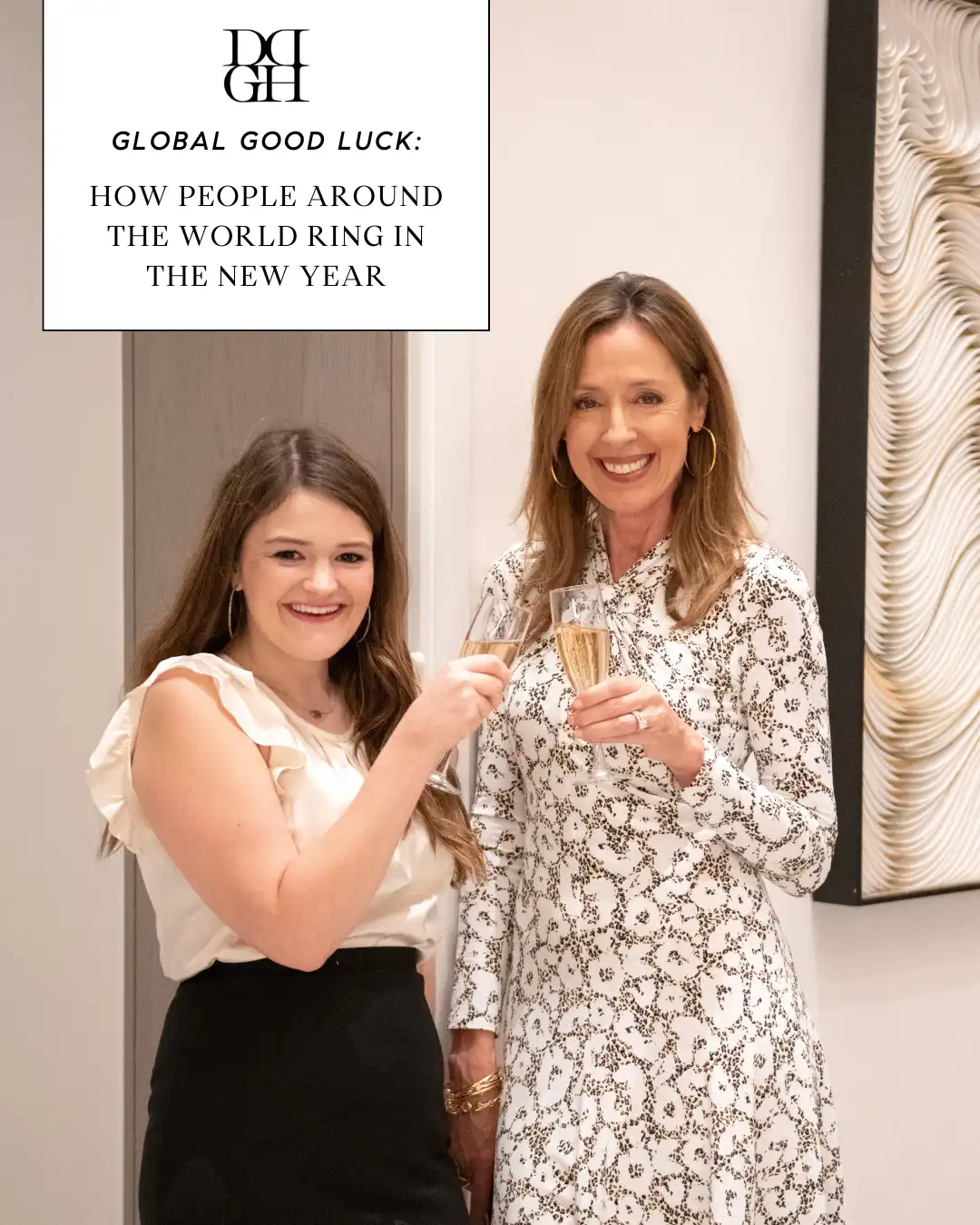
This week has been busy in the way only late December can be. Kids are home from school, everyone is squeezing in last-minute doctor’s appointments, and there’s still shopping to do and gifts to wrap. It has been busy, filled with joy, and slightly chaotic. But today marks the beginning of that in-between week, the space between Christmas and New Year’s, and it brings with it a noticeably calmer energy.
This is the week where we wake up without an agenda. There’s no pressure to buy or plan or perform. Instead, we get to simply enjoy being together. We get to sit around the table a little longer and take time to appreciate the people we’re sharing the season with. It’s one of my favorite weeks of the entire year because it’s centered on quality time.
At the same time, New Year’s is quickly approaching, and with it comes reflection, resolutions, and a shared hope for good luck in the year ahead. Across cultures, people mark this moment with traditions meant to invite positivity and fresh beginnings. Some of them are symbolic, others are playful, and in some cases, people quite literally jump into the new year.
That part isn’t just a saying. In Denmark, people actually jump into the New Year. As the clock strikes midnight, families and friends stand on chairs and jump together, symbolically leaving bad luck behind and starting fresh. The tradition is joyful, a little chaotic, and full of laughter, which feels exactly right for the way a New Year should begin.
However, many traditions are also centered around food. In Spain and across much of Latin America, people eat twelve grapes in the first twelve seconds of the New Year, one for each month ahead. Each grape represents luck for that month. Recently, a playful variation of this tradition has gone viral, with people eating the grapes while sitting under a table to invite luck in love. Whether taken seriously or done just for fun, it’s a tradition rooted in hope and intention.
Closer to home, New Year’s luck in the South is often served on a plate. Black-eyed peas are a staple on New Year’s Day and are believed to bring good fortune, wealth, and prosperity. They’re usually paired with collard greens, symbolizing money, and cornbread, often said to represent gold. This tradition feels comforting and familiar, bringing people together around the table to start the year feeling grounded and grateful.
That focus on prosperity continues in Italy, where lentils are commonly eaten to welcome the New Year. Their round shape resembles coins, making them a symbol of financial abundance. Lentils are often served with sausage or pork, foods that represent moving forward rather than looking back. Together, they serve as a reminder to carry lessons from the past without staying stuck in it.
A similar idea appears in Japan, where soba noodles are eaten on New Year’s Eve. The long noodles symbolize longevity, while their easy-to-break nature represents letting go of the past year’s hardships. Eating soba noodles reflects the belief that starting fresh doesn’t mean forgetting everything, but instead carrying forward growth, strength, and character.
In Brazil, New Year’s traditions shift from the table to what people wear. Many celebrate dressed in white, a color that symbolizes peace, renewal, and protection. Some add colorful accessories to express specific hopes for the year ahead, like yellow for prosperity, pink for love, or green for health. It’s a visual way of stepping into the New Year with intention.
And in the Philippines, round foods take center stage. Grapes, oranges, and other circular fruits are displayed to represent wealth, continuity, and abundance, inviting good fortune into the year to come.
While these traditions look different across cultures, they all share something important in common. They aren’t about doing things perfectly, but instead they’re about intention. They give people a moment to pause, reflect, and choose how they want to move forward. This New Year’s, I’ll be eating black-eyed peas, but no matter which traditions you follow, or if you don’t follow any at all, I hope the year ahead brings you joy, abundance, and moments that feel like home. Happy New Year!
Until next time,
Dee Dee Guggenheim Howes